Going Indie: Why I Chose to Self-Publish
Writing · O.E. Bruening
When people hear you've written a novel, the first question is almost always the same: "Are you going to get it published?" What they mean, of course, is traditionally published, with an agent, a publishing house, the whole machine.
I thought hard about that path. I researched it, I talked to people, and I worked with editors who came out of it. And in the end I decided to publish Eden's Rise independently. This post is about how I got to that decision, specifically the things about traditional publishing that pushed me away from it. Which took a while. There's a lot of ego you have to let go of, to say "no, I won't publish with a well-known publishing house, and I'm ok with that."
Note though that there's also a flip side. What I've come to appreciate about traditional publishing now that I'm in the trenches, is at the bottom.
Here are the four reasons that mattered most to me.
1. The Gatekeeping You Can't See or Control
I want to be fair to agents and publishers, because their job is genuinely hard. They get an enormous volume of submissions and can only give real attention to a few. They operate on thin margins, and every book they take on has to clear a certain bar of commercial success. That means they have to say no constantly, even to things that are promising. Someone poured their heart and soul into something and you have to say "not good enough", that's rough. I don't envy that position at all.
But from the author's side, the experience feels a lot like begging. You send your work and hope it doesn't end up in the slush pile, that someone will at least consider it thoughtfully. And here's the part that really got to me: a "no" often has nothing to do with the quality of your book. Maybe they already signed three fantasy authors this year and don't want a fourth. Maybe they hit their budget. You'll never know, because you have zero visibility into any of it.
That lack of certainty, being at the mercy of forces I couldn't see or influence was the first thing that didn't sit right with me.
2. Creative Control
This is the big one, and it has several layers.
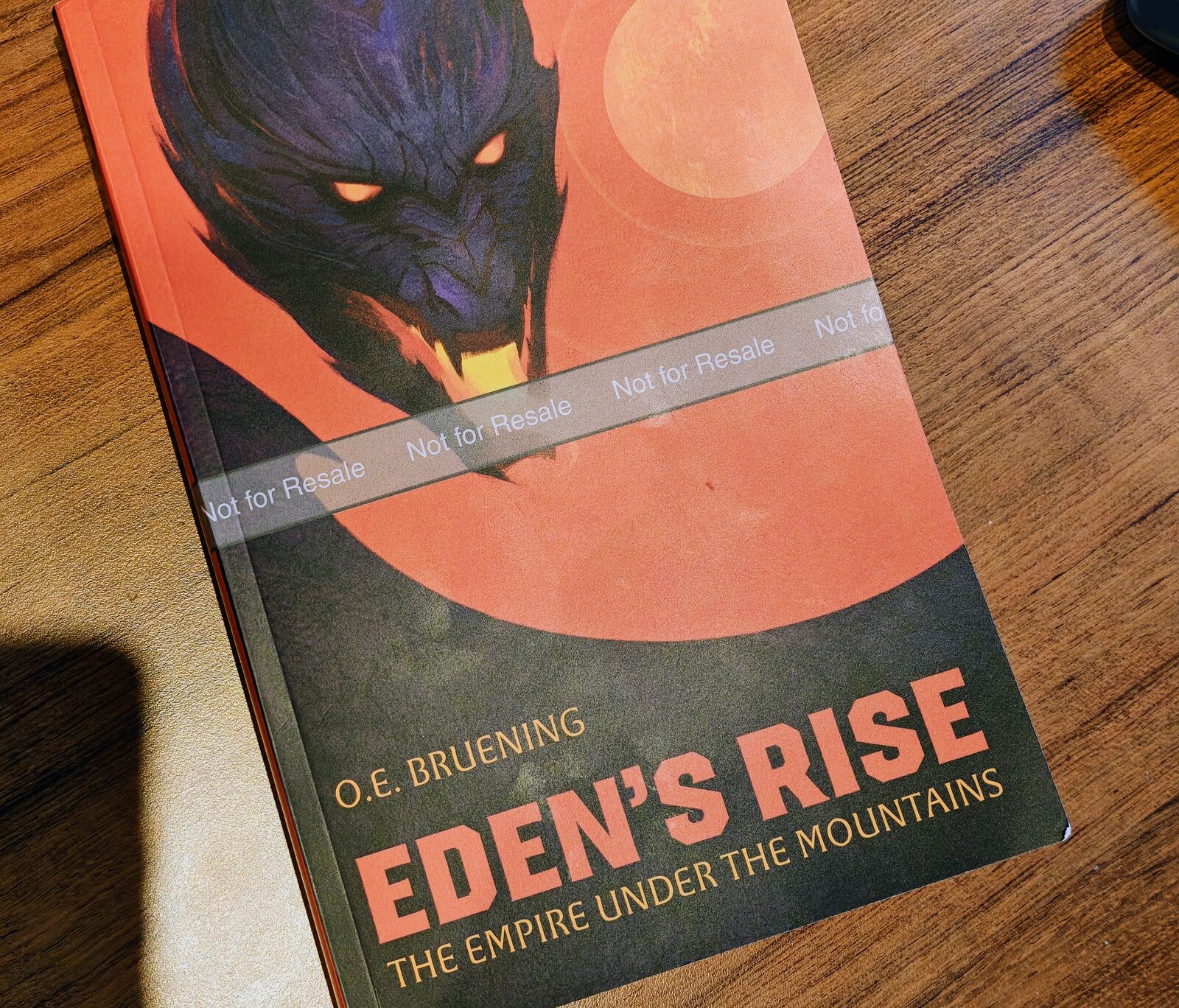
I have a specific vision for the kind of book I want to make. I want beautiful illustrations, so I hired an illustrator and paid for that out of my own pocket. I wanted a cover that stood apart, because so much of what's on shelves right now uses the same visual language and blends together. I produced an audiobook with narrators I deeply admire, Michael Kramer and Kate Reading.
With a traditional publisher, I'd have given up most of that say. As a debut author, you don't carry much credibility in the room. You're "just a guy with an opinion."
The sharpest version of this is the formula. A recurring piece of feedback I got from "industry editors" was that my book "doesn't follow the formula." And I can see the logic: formulas exist because they work, and if your business depends on selling books, you follow what sells. But that's exactly the trap. With a publisher who owns the rights, an editor can tell you here's how the book needs to change so we can sell it, and you have no real choice in the matter. I wanted to write the book I set out to write, not a market-optimized version of it.
What made it worse is that the "industry editors" could not agree on what the formula was. I got very conflicting feedback. One editor disliked my multiple, loosely connected timelines, but Kirkus called that one of the book's strongest choices. Another told me I needed more dragons, telling me to scrap the book and start over. Every editor applied the formula differently, and none of it was consistent. The way I navigated it was simple: I held onto what I'd decided was the core of the book, stayed critical, took the feedback that genuinely served the story, and set aside the rest. I got to make that call. With a publisher who'd bought the rights, I might not have.
3. Marketing
Selling books is hard, so publishers put their money where the return is most predictable, and that is almost never a debut author. It's the established name with a track record. Every dollar spent on a known author is more likely to come back, so that's where the budget goes. Publishers do support newer authors too, but it's not the same, and at the end of the day it's a business decision. If you have payroll to make, you fund the safe bet.
Which leads to the realization that sealed it for me: even with a traditional publisher, a debut author is largely expected to build their own platform, find their own readers, and do their own marketing. So if I'm going to do all that work anyway, I might as well do it as an independent author and keep the control and the upside that come with it.
This wasn't just my own assumption, either. A friend who recently took an editing job at a publishing house confirmed it from the inside.
4. Editors and the Uncertainty of Who You Get
The editors I worked with were freelancers who had left the industry rather than people currently inside it, so my sample is admittedly self-selected. But there was a real jadedness to some of them, a kind of arrogance and negativity toward authors and even readers that I assume comes from twenty years of working with difficult, opinionated, often unsuccessful writers. Some of them were posting that cynicism openly on LinkedIn while simultaneously offering their freelance services to authors. I found that genuinely hard to understand.
That crystallized a worry about the traditional path: with a publisher, you don't choose your editor. You're one book among many, and you get paired with whoever someone else, in some meeting you weren't in, decided should handle you. You might land an amazing team, and honestly, I'd guess most people in publishing are there because they love books, since it's a tough industry to be in otherwise. But you might also end up with someone who's just collecting a paycheck. I want collaborators who are excited about the book, not assigned to it. The uncertainty of not knowing which I'd get was the last piece that pushed me away.
When I did go looking for my own editor, I leaned into exactly that. Several offered a tryout, where they'd edit the first twenty pages or first chapter. So I sent the same sample to three or four of them. Only one clearly connected with the book and the characters; the others were focused purely on details, on getting it over with. The one who actually cared is the one I ended up working with. That's a choice I wouldn't have had within a traditional house.
What I've Come to Appreciate About Traditional Publishing (So Far)
Even though I still believe self-publishing was the right decision for now, being further down the road, I've developed real respect for some things a traditional publisher provides that I underappreciated going in.
Distribution. I had no idea how complicated this is. Getting into basic distribution channels like Ingram as a debut author is essentially impossible unless you go print-on-demand through IngramSpark / LightningSource. And if you want to print your own illustrated book the way I do, getting that into Ingram is its own near-impossible problem. The distribution a publisher hands you turns out to be enormously valuable.
The money. As an indie author, you front all of it, every cost of getting the book out the door. A traditional publisher absorbs that risk. I figured going in that I could handle the expense, and I can, but looking at the bills as they add up, I have a lot more appreciation for what it means to have someone else carry that.
The sheer amount of work. I didn't anticipate how much every little thing would take. Systems don't talk to each other. Everyone handles things slightly differently, the file requirements vary from platform to platform, and the same cover file gets printed completely differently by KDP and Ingram. Every small step demands focus and attention, and it adds up fast.
The loneliness. In the end, it's you and no one else. There's no team in the building, no shared excitement in the hallway. That can be hard on morale, and it's harder to deal with than I expected.
None of this changes my decision. But it's made me a lot more clear-eyed about what I gave up to make it, and a lot more grateful for the people and infrastructure that make traditional publishing what it is.