Certified Human
Writing · O.E. Bruening
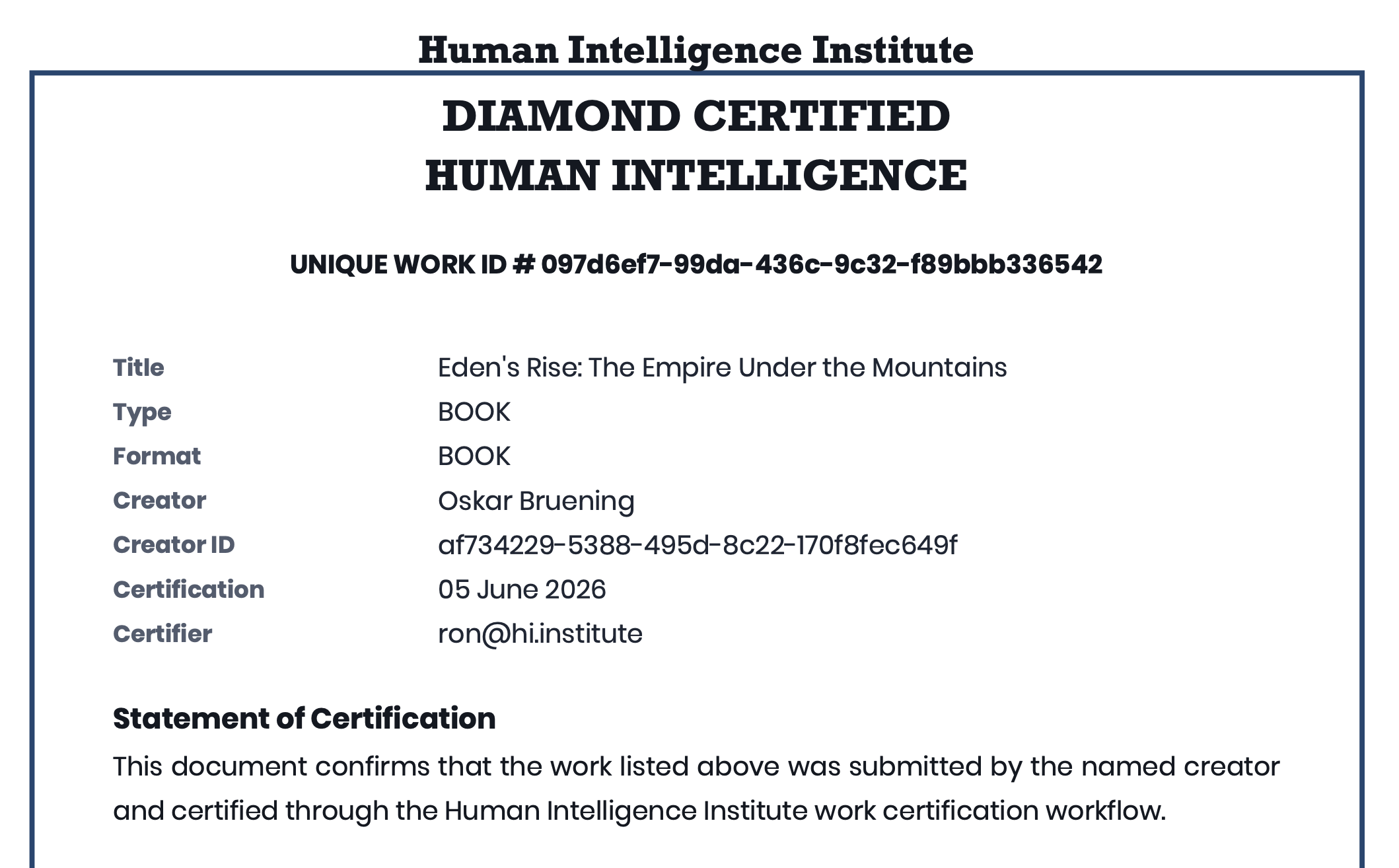
Today my work was certified as human-created.
Not that there was ever any doubt about it. I finished my very first draft just around the time the first (terrible) version of ChatGPT became available.
But this certification is important to me, because I worry that without it there will be unnecessary questions and doubt. I use a lot of AI for my work and, despite all the disruptions and very real impact on people's lives, feel that in the long run, AI's upsides, similar to the internet and the industrial revolution, will far outweigh the downsides.
Yes, there are real downsides. For example, data centers and their environmental impact, just like the smog of early factories, will need to be reined in. For context, I live in Cleveland and the Cuyahoga River going through the city is famous because it used to catch on fire frequently. On fire! All thanks to uncontrolled industrial runoff. Obviously, that was fixed decades ago through civic action and regulations. The river and downtown Cleveland are now clean, green, and beautiful. We need to do the same with data centers.
Back to AI. The genie is out of the bottle. It's here to stay and it will change how we work, how we live. It has the potential to impact our lives in unimaginable ways. And it can be a force for good: nationwide courts are seeing more and more people using AI to help them navigate legal statutes and file pro se lawsuits. That's a good thing. These are people who until now could not get a lawyer to pay attention to them. Or couldn't pay them. People who have been disenfranchised, now have an opportunity to get their day in court. And yes, it also opens up the door to scams. But the democratization of systems that are inherently biased against some part of the population, whether based on race, income level, gender, or otherwise, whether on purpose or a factor of market economics, is a good evolution. It is a step in the right direction.
But this democratization, this AI-induced increase in productivity, is much harder to apply to art, because art is inherently about the human. It connects us with our emotions. Good art makes us feel something, might even change our perspective. As such, it has never just been about the work itself. It's been just as much about the artist who created it. When we talk about van Gogh, we don't just say "wow, nice swirls." We correlate what we see to what we know. We think "is that an expression of his tortured soul? Does this painting tell me why he committed suicide? What does this tell me about myself?"
Yes. The AI models are getting better. But AI has been trained on the internet. It's the average of everything that ever was. Where is the creativity in that? Still, inevitably, it might also be able to write a complete, coherent novel one day.
But I do wonder, what would be the point?
I obsessed for 800 hours on my novel, crafted every word, every foreshadowing. It was hard. It was exciting. It pushed me. It was deeply satisfying.
When I had finished, I made the discovery that so many authors go through with their debut novel: I thought I wrote a fun book about dwarves and dragons only to realize it was also about me, that my life experiences, my personal struggles had bled onto the pages in unexpected ways.
And I think that's what we see when we look at art, when we read a novel. We can't put our finger on it, but we can feel the love and attention that a human soul poured into it. And we can tell when they didn't, when they threw something together, called it "done" and moved on, leaving us with an empty, dissatisfying experience. We get the same feeling from AI slop.
The industrial revolution didn't replace artists with robots, but it did give us industrial paints and new sculpting processes that have allowed for works on unprecedented scale. Thanks to new chemicals it even created a completely new form of art: photography. Similarly, the internet didn't replace the artist with an algorithm but it did give us youtube so anyone can learn a skill, instagram so anyone can share their creations, and venmo so anyone can be paid for them.
I have a hard time imagining that AI will be different and actually replace the artist. But until we know how to deal with it, we'll be living in uncertainty, will have to face questions like "is this real?", will have to rally against companies when they use AI in unethical ways.
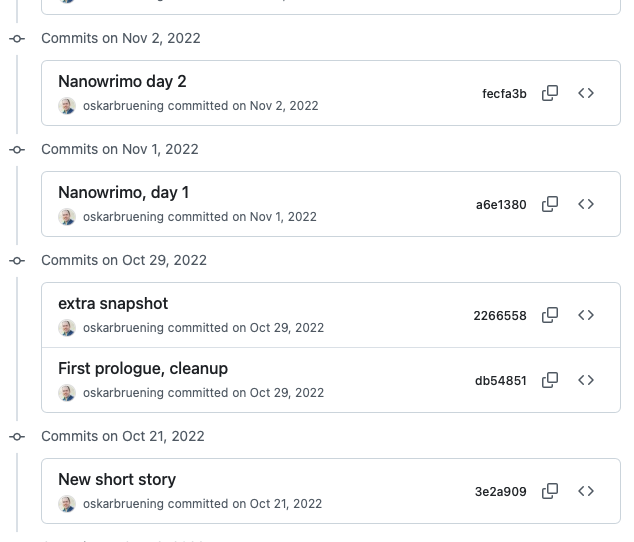
This is why I appreciate the work of the Human Intelligence Institute and their efforts to evaluate every piece of submitted art to determine whether it was human made and if so, certify it as such. They painstakingly review not just the work but how it was created, dig into file logs and processes before granting a certificate.
Trust is a scarce resource in these uncertain times. Having work certified as human is one less headache, one less nagging question in the back of our minds "is this real? Or is someone trying to dupe me?"